Makina Market -
Caveni.Arlington@gmail.com
+254 769 944116
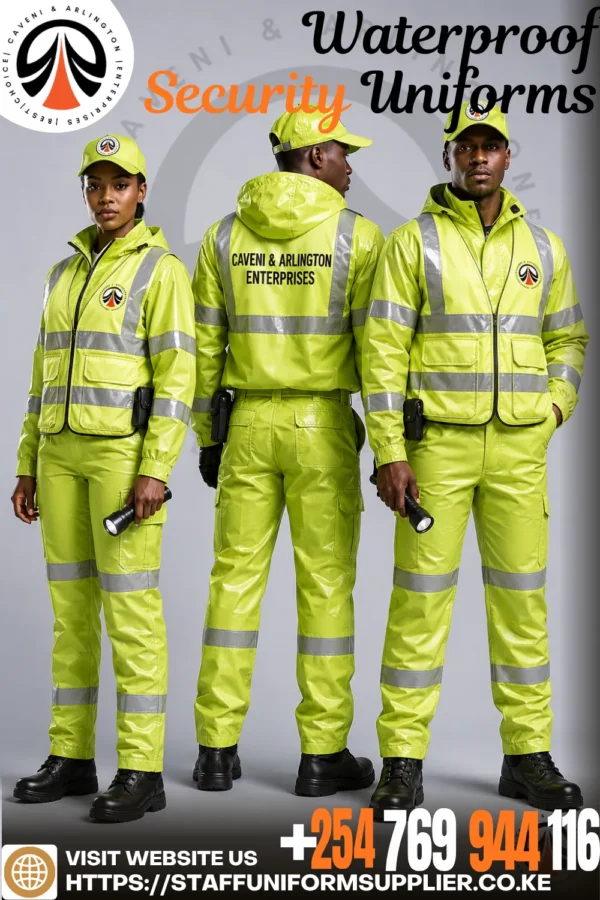
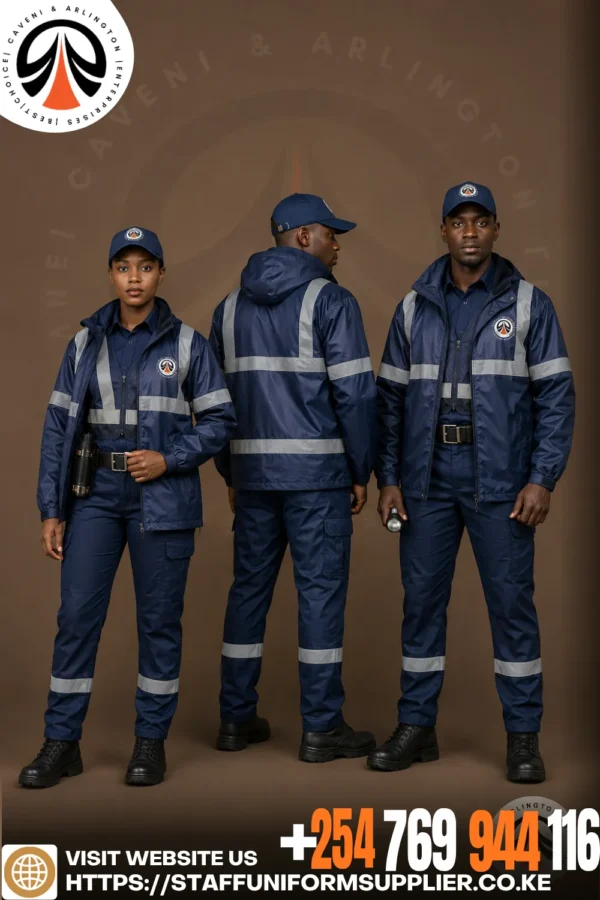
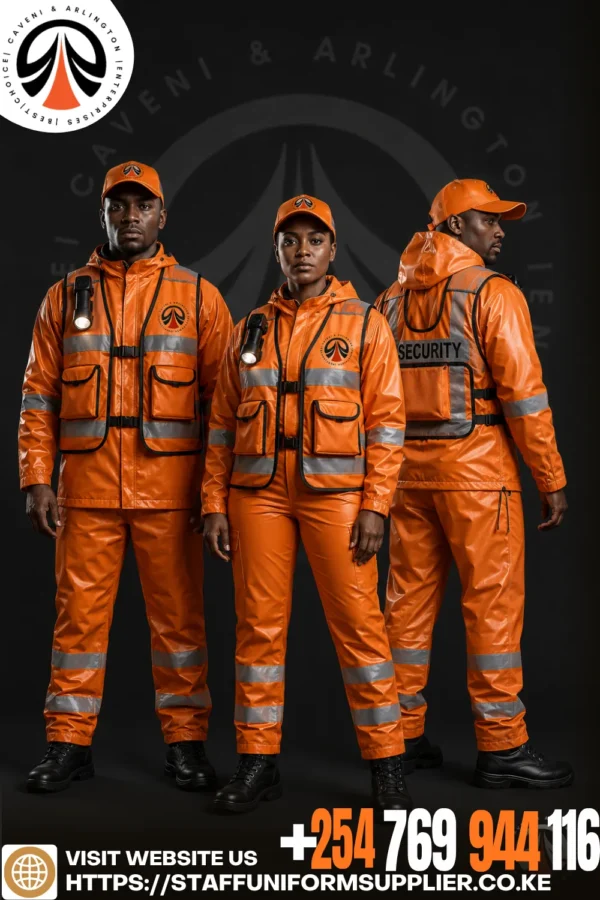
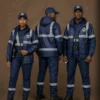
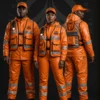
Waterproof security uniforms are essential for guards stationed outdoors through Kenya’s rainy seasons, where staying dry directly affects comfort and alertness on duty. Caveni produces waterproof security uniforms to order, matching the level of water resistance and construction to each client’s actual exposure and duty pattern.
Caveni manufactures waterproof security uniforms for security firms and corporate clients across Nairobi, Mombasa, and Kisumu who need outdoor personnel to remain dry and presentable through wet conditions. Every uniform is built to order, with the client involved in deciding between a fully waterproof outer shell or a water resistant treatment applied to a standard uniform fabric. This decision is shaped by how much time personnel actually spend exposed to rain during a typical shift.
Gated estate security, industrial site guards, and outdoor event security teams across Kenya commonly request waterproof uniforms for personnel stationed at exposed posts for extended periods. Traffic management and car park security teams also specify waterproof outerwear, particularly during the long and short rains, when exposed duty without proper protection reduces comfort and performance. Coastal security teams in Mombasa additionally request corrosion resistant fittings suited to salt air exposure.
A waterproof security uniform can use a fully waterproof shell for personnel exposed to continuous rain, or a lighter water resistant treatment for guards who move between indoor and outdoor duty during a shift. Taped or sealed seams at stress points prevent moisture entry, while breathable membrane linings stop heat and sweat from building up underneath the outer layer.
Clients can specify storm flaps over zip closures, adjustable water resistant cuffs, and corrosion resistant hardware for coastal deployments in Mombasa. Reflective taping and high visibility panels are commonly added for personnel directing traffic or working in low light during poor weather, alongside standard embroidery and badge placement.
Caveni discusses exposure level, layering needs, and seam construction with every client before production, rather than offering one fixed waterproof range. This means the finished uniform matches the actual weather challenges a security team faces on site. Fastenings, hardware, and lining choices are all reviewed at the consultation stage to avoid common failure points such as leaking seams or corroded zips. Companies preparing outdoor teams for the rainy season can contact Caveni ahead of time for a bulk order timeline.
What is the difference between a waterproof shell and a water resistant uniform?
A waterproof shell blocks water completely and suits continuous outdoor exposure, while a water resistant treatment suits guards who move between indoor and outdoor duty.
Do waterproof uniforms trap heat?
Breathable membrane linings and ventilation points can be added to prevent heat and moisture build up underneath a waterproof outer layer.
Can waterproof uniforms be worn over an existing uniform?
Yes, Caveni can design waterproof outerwear to be layered over a base uniform, coordinated in cut and sizing so it fits without restricting movement.
| Feature | Specification | Ideal Use Case | Kenya Climate Fit |
| Waterproofing Level | Full shell or water resistant treatment | Outdoor and exposed posts | Matched to exposure time |
| Breathability | Membrane lining, ventilation gussets | Extended outdoor shifts | Reduces heat build up |
| Seam Treatment | Taped or sealed seams | Rainy season deployment | Prevents moisture entry |
| Closures | Water resistant zips, storm flaps | Traffic and event security | Keeps openings sealed |
| Layering | Standalone or layered outerwear | Mixed indoor and outdoor duty | Flexible across seasons |
| Visibility | Reflective taping, high visibility panels | Low light and traffic duty | Improves safety and identification |
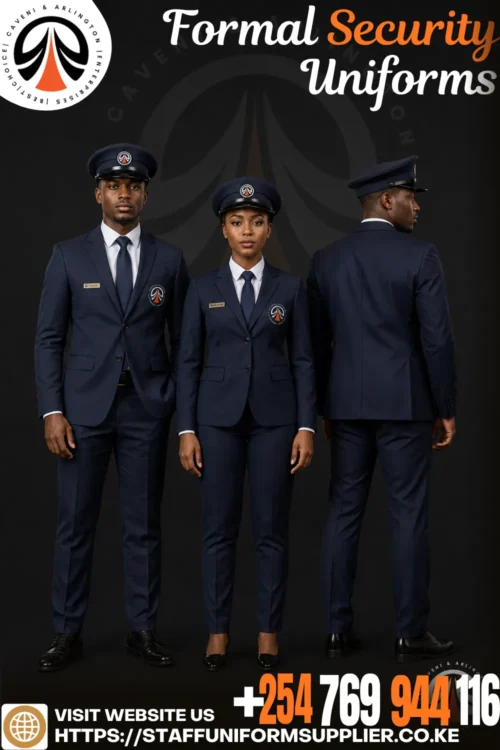
Caveni Corporate Staff Uniforms designs formal security uniforms made to…
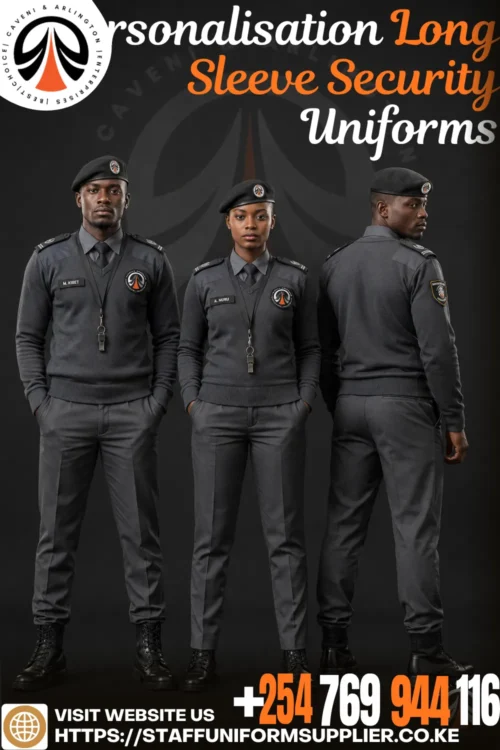
Caveni Corporate Staff Uniforms provides full security uniform personalisation, covering…
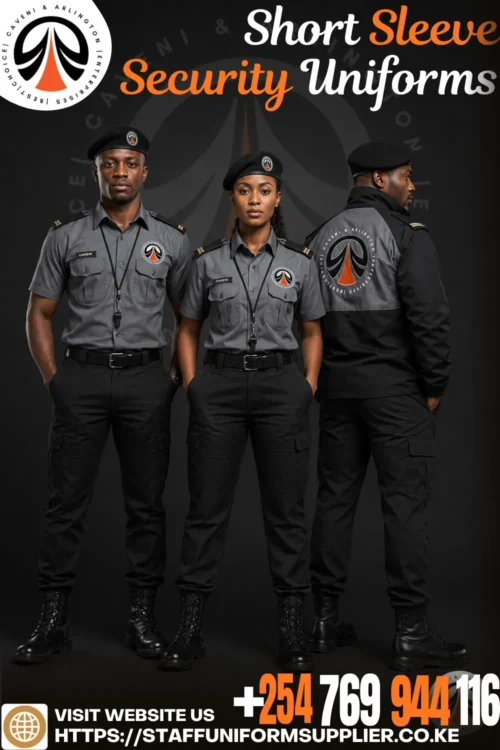
Caveni Corporate Staff Uniforms manufactures custom short sleeve security uniforms…
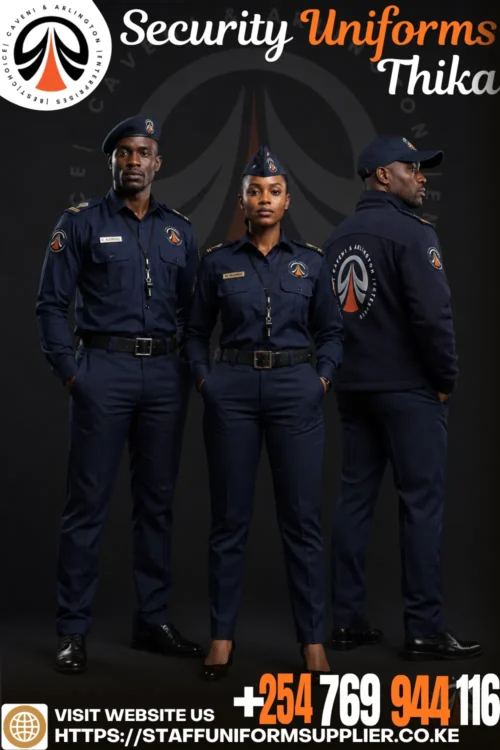
Thika’s dense industrial base and busy commercial centres need security…