Makina Market -
Caveni.Arlington@gmail.com
+254 769 944116
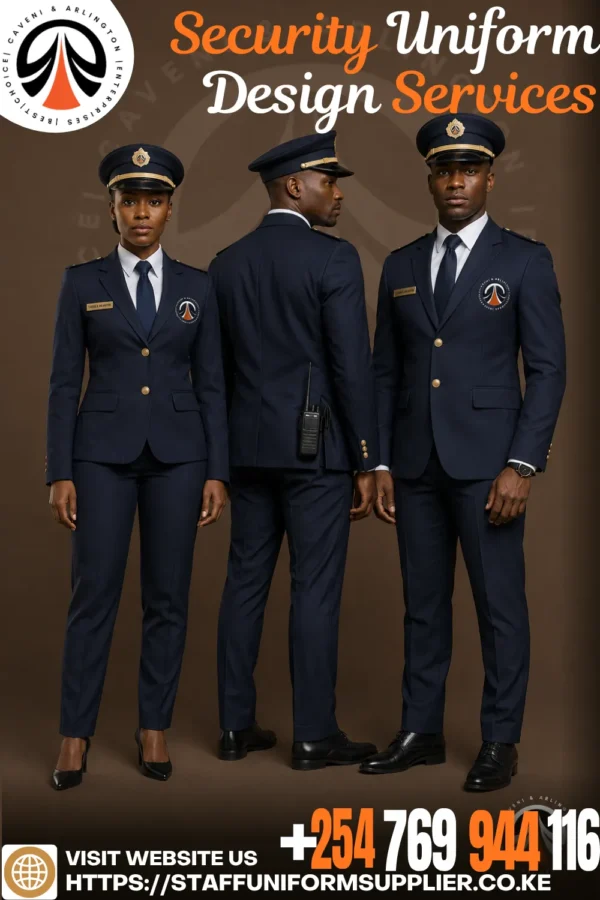
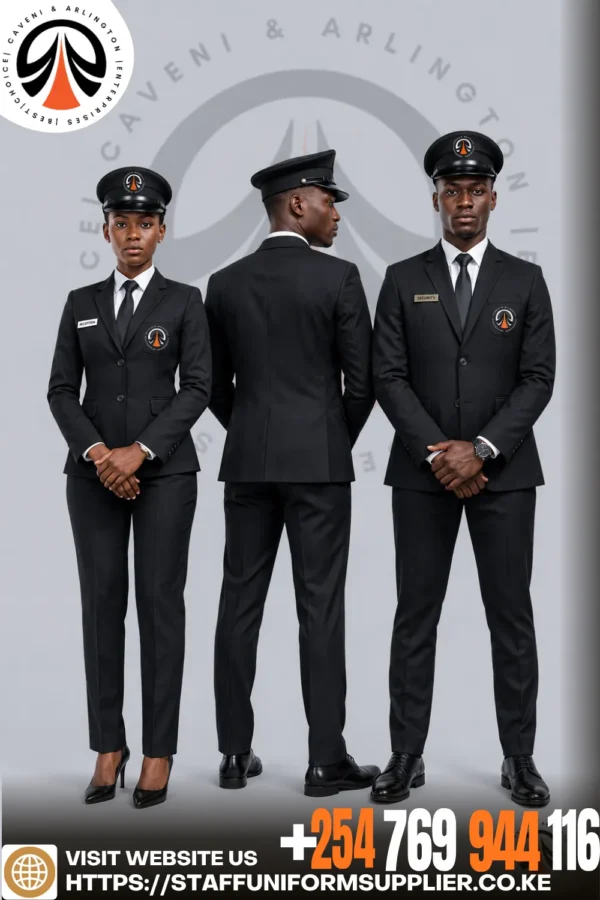
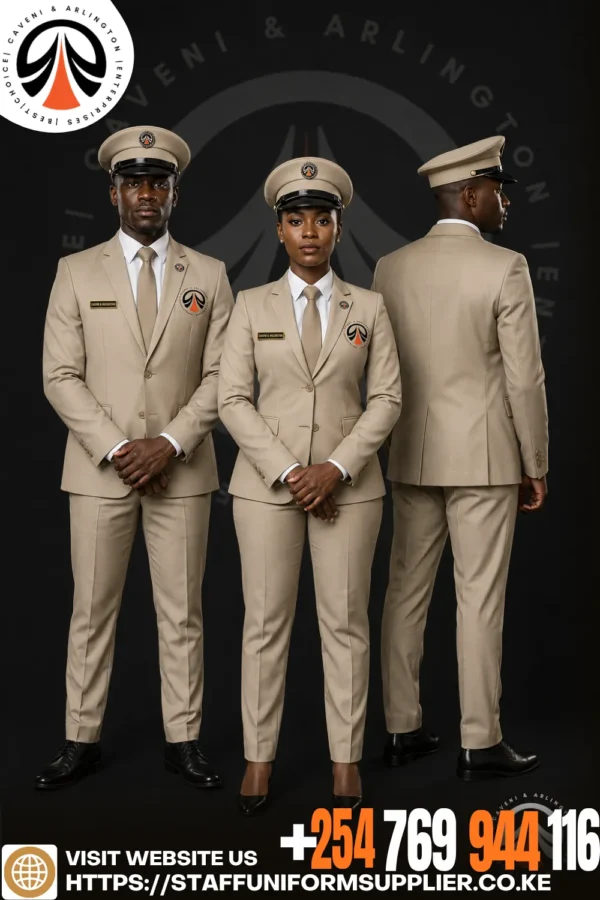
Uniform design decisions, covering cut, colour, branding placement, and fabric, need to be made deliberately before any garment is cut. Caveni & Arlington Enterprises provides security uniform design services as a distinct stage within the made-to-order process, giving companies control over how their uniform represents their brand before production begins.
Design work starts with a consultation covering brand guidelines, existing corporate colours, and functional requirements specific to the roles being uniformed. Colour matching is tested against approved brand references before fabric is committed to full production, preventing the common mismatch between how a colour looks on screen and how it appears once produced in bulk. Revisions are treated as a normal part of the process, allowing adjustments to detail placement or fabric weight before a final version is approved. This protects companies from being locked into a design that only reveals its flaws once hundreds of units have already been produced from it.
Design priorities shift depending on the sector. A hospitality brand in Nairobi may prioritise a refined, guest-facing silhouette, while a security firm covering industrial sites in Thika needs design decisions weighted toward durability and equipment placement. Corporate offices typically prioritise a structured, professional cut for client-facing staff, while healthcare and learning institutions need designs that stay comfortable and presentable through long shifts.
Design services are adjusted to these priorities rather than applying one template across every industry. Retail and front-of-house teams typically prioritise a polished, approachable look, while industrial workwear design focuses on function first, with aesthetics built around what the role actually requires day to day.
| Stage | Focus | Client Input Required | Outcome |
| Consultation | Brand guidelines and role needs | Colours, logos, functional priorities | Clear design brief |
| Colour matching | Fabric tested against brand colour | Approval of tested samples | Accurate colour in production |
| Functional design | Pocket, reinforcement, ventilation | Role-specific requirements | Uniform suited to actual duties |
| Sizing architecture | Graded pattern development | Team size range | Consistent fit across body types |
| Revisions | Adjustments before final approval | Feedback on initial concepts | Design that meets expectations |
| Documentation | Specification saved on file | Final sign-off | Reference for future orders |
| Handover to production | Approved design moves forward | None, design is finalised | Smooth transition to manufacturing |
Fabric decisions made at the design stage determine how a uniform performs once it reaches daily use. Weight, breathability, and finish are selected based on how a garment will actually be worn, whether that means outdoor patrol conditions, humid coastal postings, or extended indoor shifts.
Fabric samples are tested against brand colour references at this stage, since colour behaves differently across fabric types and finishes, and confirming this before bulk production avoids costly correction later. Companies with staff working across different climates within Kenya can request more than one fabric finish under the same design, provided the overall look remains consistent across teams.
Functional design elements are worked through alongside aesthetics, including pocket placement, reinforcement points, and how branding such as embroidered logos or woven labels is positioned so it remains visible and intact through daily wear. Sizing architecture is also addressed at this stage through graded pattern development, ensuring a design holds its intended shape across a full range of body types rather than looking correct on only one body type and distorting on others. This groundwork ensures a consistent silhouette across an entire team once production begins.
Documentation produced during the design phase becomes the reference point for every future order placed by that client, connecting design work directly to long-term supplier continuity rather than treating it as a one-time exercise. Caveni & Arlington Enterprises structures design services this way so that once a specification is approved, it can be reproduced accurately for reorders, alterations, or expansion of the uniform programme without repeating the design process from scratch. This makes the design stage a one-time investment that continues to pay off across every order that follows.
Who is involved in the design consultation stage?
Company representatives work directly with the design team to confirm branding and functional priorities.
How is colour accuracy confirmed before production?
Fabric samples are tested against the client’s approved colour references before full production begins.
Can a design be revised after initial concepts are shared?
Yes, revisions are a standard part of the process before a final version is approved.
Companies planning a new uniform programme can start a design consultation with Caveni & Arlington Enterprises before committing to production.
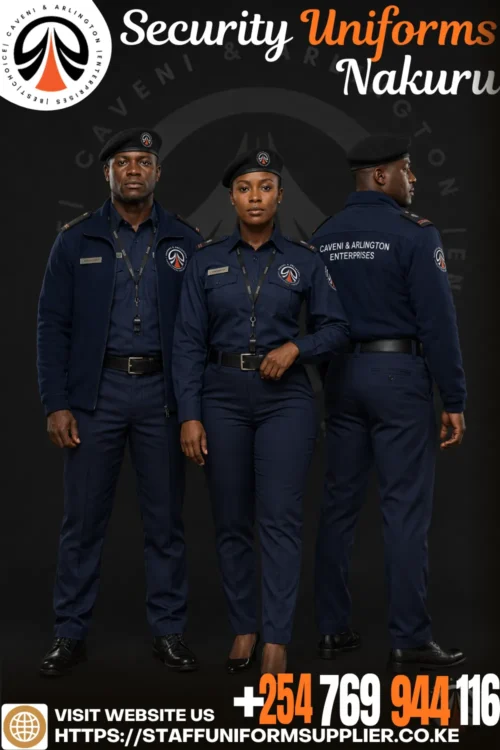
Nakuru businesses need security uniforms that stand up to varied…
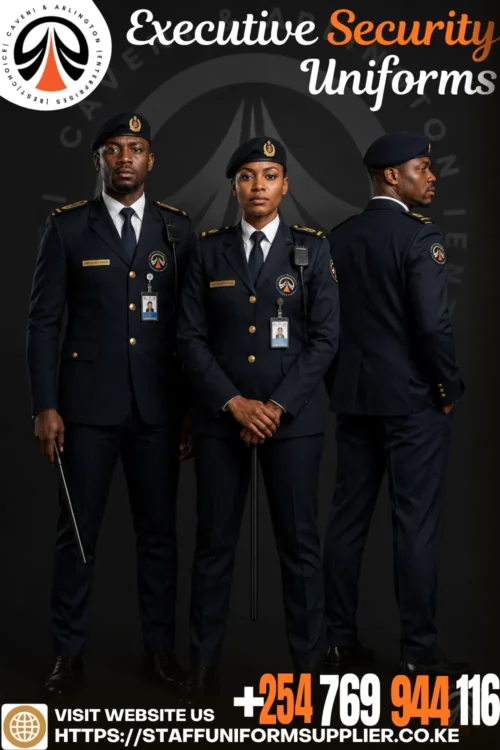
Caveni Corporate Staff Uniforms designs custom executive security uniforms made…
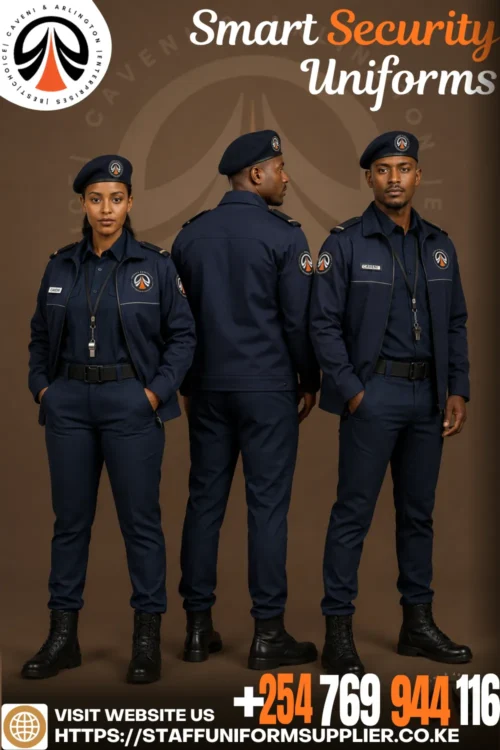
Caveni Corporate Staff Uniforms produces smart security uniforms made to…
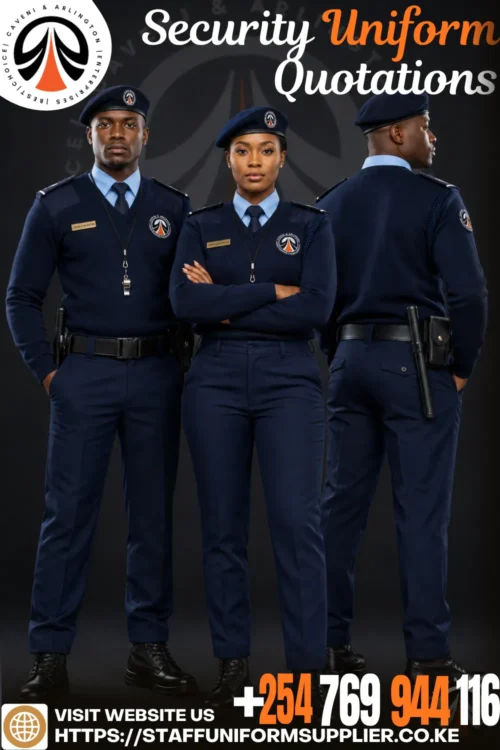
Security uniform quotations from Caveni Corporate Staff Uniforms are detailed,…