Makina Market -
Caveni.Arlington@gmail.com
+254 769 944116
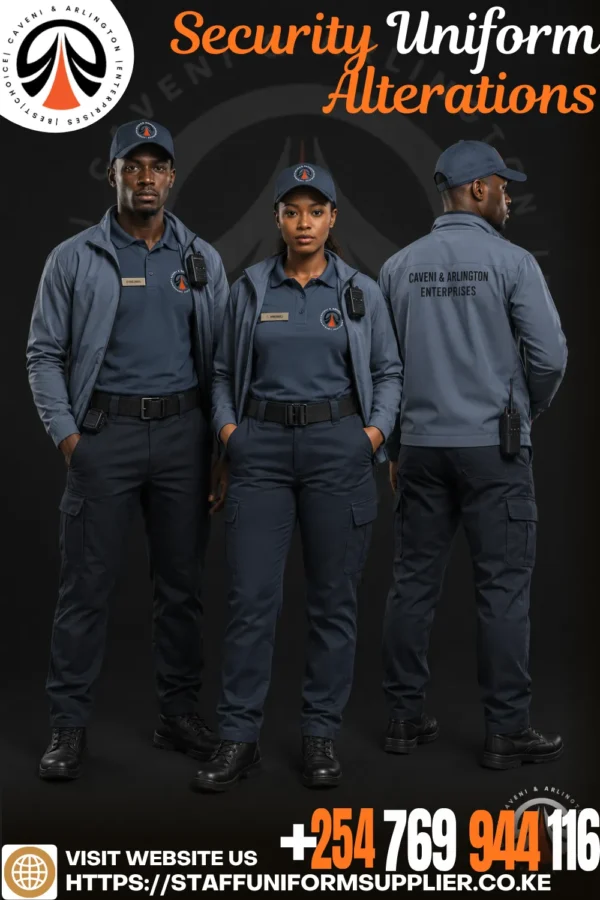
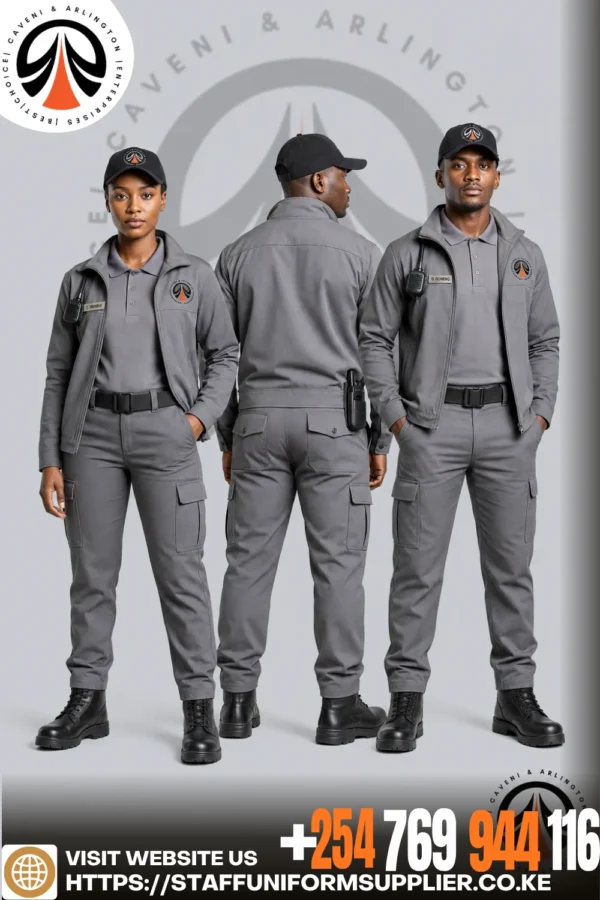
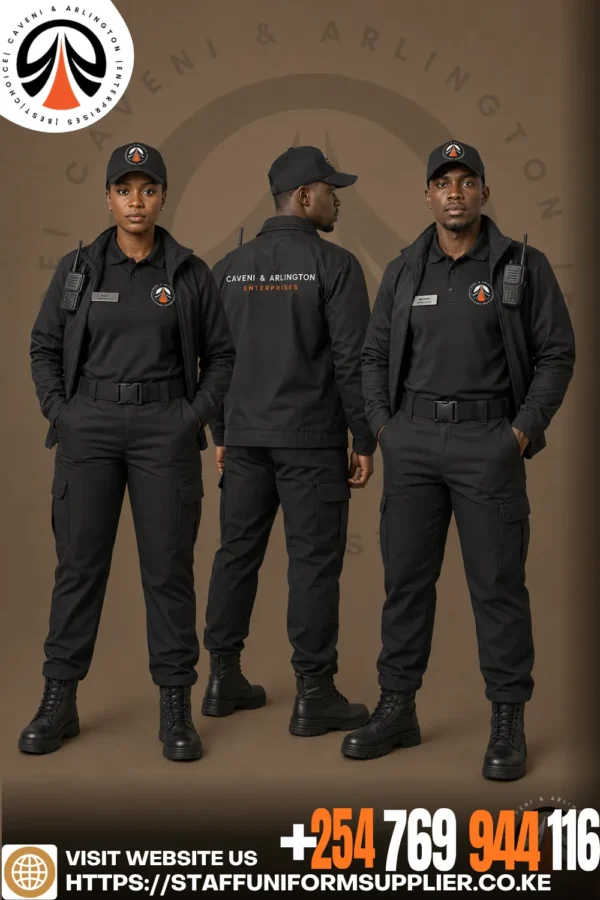
Even with precise initial measurements, security uniforms need adjustment over time as staff change roles, transfer between duty types, or wear a uniform through months of active service. Caveni & Arlington Enterprises offers dedicated alteration services for security uniforms, since a made-to-order approach continues to apply after a uniform is delivered, not only at the point of production.
Alteration work covers fit corrections, wear repair, and branding updates on uniforms already in circulation. Rather than issuing a full replacement for every adjustment, existing garments are corrected to suit new roles, physical changes, or updated company branding. This is typically faster than new production, since it involves modifying an existing garment rather than building one from raw fabric, and it is well suited to urgent corrections needed ahead of inspections or contract audits. Treating alterations as part of the same ongoing relationship also means uniforms stay useful for longer instead of being replaced at the first sign of wear.
Alteration needs vary by how a security team is deployed. Guards moved from static posts to active patrol roles in Nairobi or Kisumu often need a different cut through the shoulders and legs for mobility. Teams operating in humid coastal conditions in Mombasa may need adjustments related to fabric wear from frequent laundering.
Companies undergoing a corporate rebrand across multiple sites often need existing uniforms updated with new insignia rather than replacing an entire fleet at once, regardless of industry or region. Facilities management firms overseeing guards across several client sites often schedule alterations in batches, timed around routine uniform inspections rather than handled one guard at a time.
| Trigger | Typical Adjustment | Urgency Level | Recommended Approach |
| Role reassignment | Cut adjusted for mobility | Moderate | Schedule ahead of role change |
| Natural fit changes | Waistband, sleeve correction | Low to moderate | Address during routine review |
| Wear and tear | Reinforcing stress points | Moderate | Repair before visible damage spreads |
| Faded branding | Replacing insignia or strips | Low | Bundle with other adjustments |
| Branding refresh | Updating existing garments | Moderate to high | Plan around rebrand timeline |
| Inspection or audit | Fast turnaround correction | High | Prioritise for immediate fix |
| Seasonal duty change | Fabric weight adjustment | Low to moderate | Plan ahead of season change |
Repair work often focuses on reinforcing stress points that wear fastest under daily use, including shoulder seams, knees, and pocket edges. Replacing worn fastenings, restoring reflective strips, and reinforcing high-friction areas extends the usable life of a uniform considerably.
Because fabric and trim details are drawn from the same records used in original production, alterations use matching materials rather than introducing a different fabric batch that could stand out against the rest of a uniform fleet. This attention to matching detail is particularly important for visible elements like collars, cuffs, and branded panels that face regular wear.
Branding updates are one of the more common alteration requests, particularly when a company refreshes its logo or colour scheme partway through a uniform’s lifecycle. Existing embroidered insignia or reflective branding strips can be replaced on current uniforms rather than discarding garments that are otherwise still in good condition.
Fit-related customisation, such as adjusting waistbands, sleeve lengths, or jacket structure, is handled individually per guard rather than applied as a blanket resize across an entire team. This individual approach keeps alterations accurate even within a large, varied workforce.
Because Caveni & Arlington Enterprises retains pattern and fabric records from original production, any alteration made stays consistent with the initial specification rather than introducing mismatched stitching or fabric from an unrelated source. This continuity is why many companies keep alteration work within the same relationship used for original production and design, rather than sourcing adjustments externally where consistency cannot be guaranteed. A dedicated contact familiar with the account also means alteration requests are handled quickly, without needing to re-explain a company’s specification each time.
Does an alteration require a full new uniform order?
No, alterations adjust the existing garment rather than replacing it entirely.
Can alterations update branding after a logo change?
Yes, embroidered insignia and reflective branding can be replaced without full reproduction.
How fast is alteration turnaround compared to new production?
Alterations are generally faster, since they modify an existing garment rather than building one from raw fabric.
Companies needing to update or correct existing uniforms can arrange alteration support with Caveni & Arlington Enterprises.
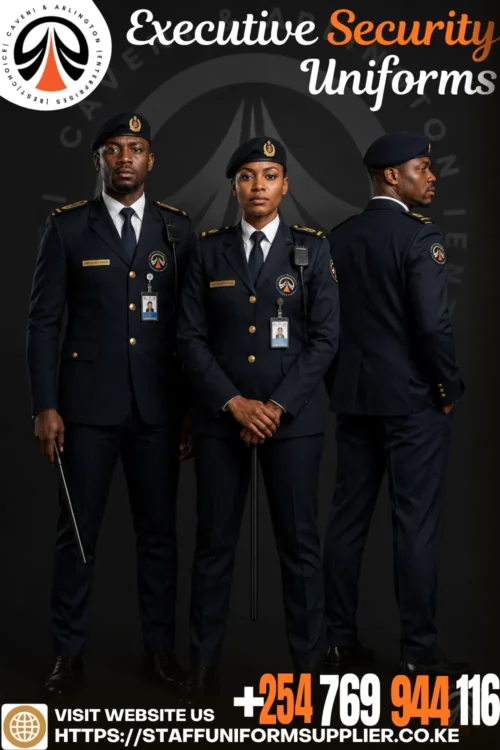
Caveni Corporate Staff Uniforms designs custom executive security uniforms made…
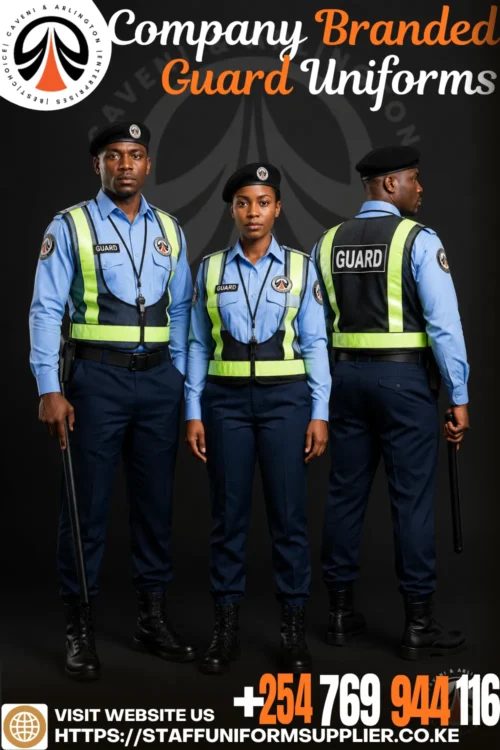
Caveni Corporate Staff Uniforms builds company branded guard uniforms for…
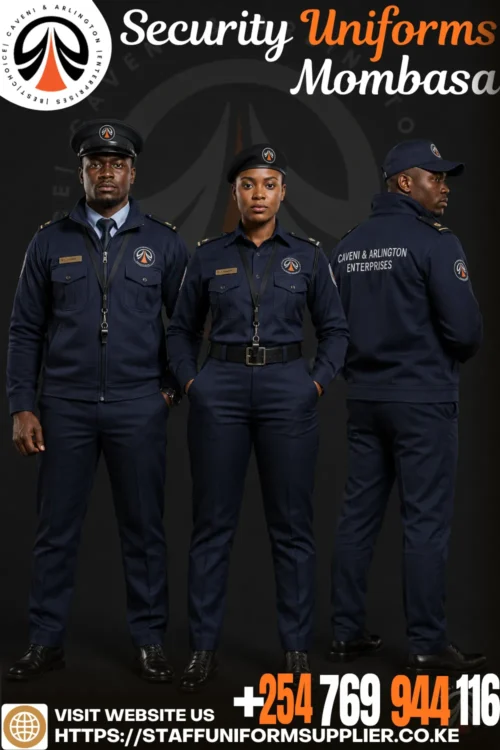
Security firms and facility managers across Mombasa need uniforms that…
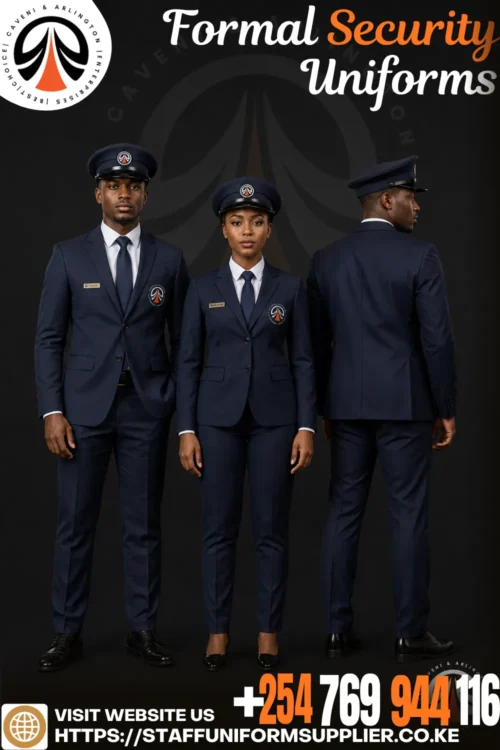
Caveni Corporate Staff Uniforms designs formal security uniforms made to…