Makina Market -
Caveni.Arlington@gmail.com
+254 769 944116
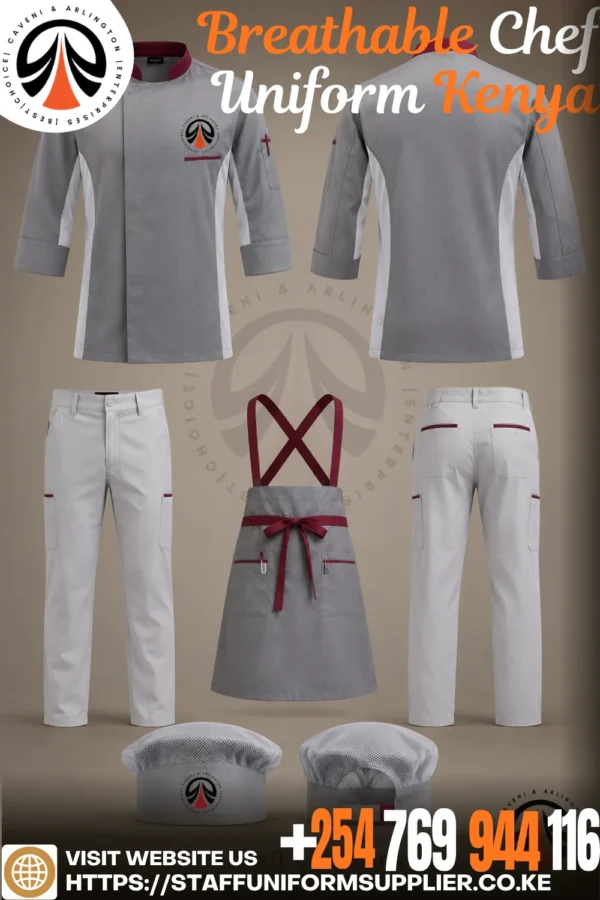
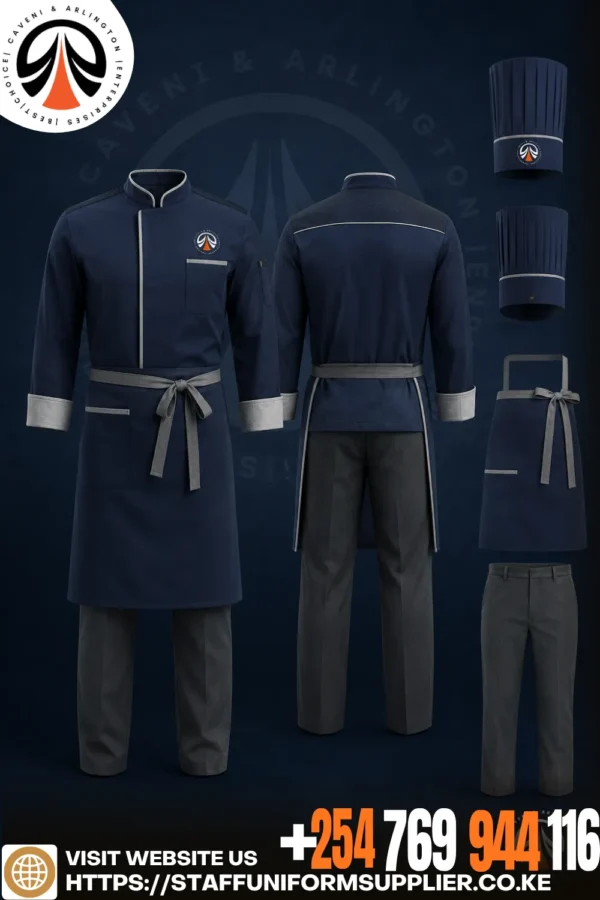
Breathable chef uniform Kenya is a specification category that addresses one of the most practical challenges facing kitchen staff in Kenya: working efficiently in hot, high-humidity environments while maintaining a professional appearance and complying with hygiene standards. From Mombasa’s coastal resort kitchens to Kisumu’s lakeside hotel operations and Nairobi’s busy commercial kitchen environments, breathability is a genuine performance requirement, not a marketing feature. Caveni Staff Uniforms supplies breathable chef uniforms designed for Kenya’s specific climate conditions across the country.
A commercial kitchen generates significant heat from cooking equipment, steam, and the physical activity of kitchen work. When ambient temperatures are already elevated, as they are in coastal and lakeside regions of Kenya, heat stress on kitchen staff becomes a real operational and welfare concern.
Heavy, non-breathable fabrics trap body heat and moisture, leading to discomfort, reduced concentration, and in extreme cases, heat-related health issues. Breathable chef uniforms reduce this risk by allowing air circulation and moisture evaporation through the fabric, keeping kitchen staff cooler and more comfortable through extended service shifts.
Breathability in a chef uniform is primarily a function of fabric composition, weave type, and garment construction. A tightly woven synthetic fabric may be durable but traps heat. A loose-weave cotton fabric breathes well but wears quickly under daily kitchen use. Caveni balances these properties through its fabric selection process for breathable chef uniform specifications.
Caveni’s breathable chef uniform range centers on fabrics that combine the natural air permeability of cotton with the practical durability of synthetic fibres. The primary specification is a 60% cotton and 40% polyester lightweight blend with an open weave structure that allows air movement through the fabric. For the most demanding coastal environments, a higher cotton content of 70% to 80% is available, which maximizes breathability at some cost to wrinkle resistance. All breathable fabric specifications are pre-shrunk and tested for colour fastness across a minimum of 60 commercial wash cycles.
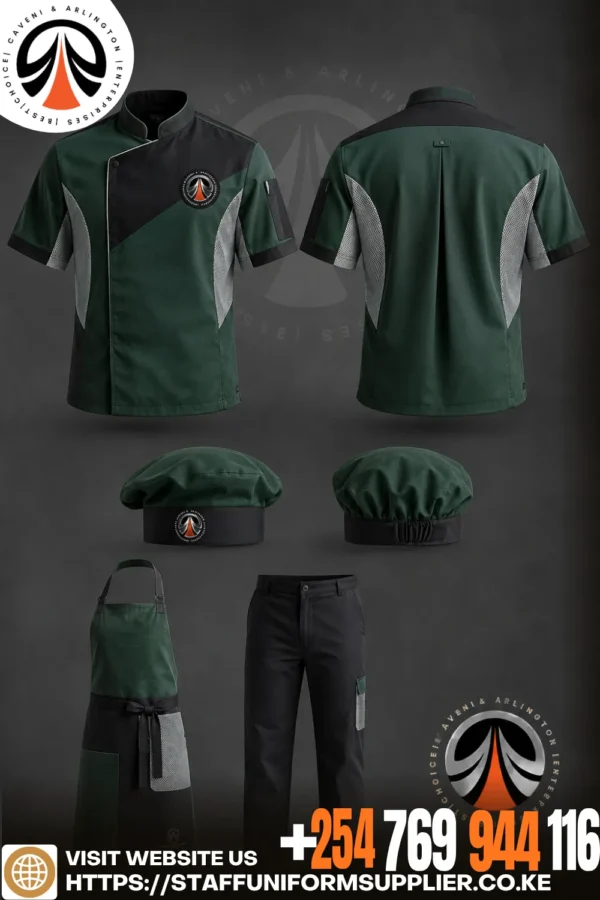
Beyond fabric composition, Caveni incorporates construction details that enhance ventilation in breathable chef uniform designs. Underarm gussets allow freedom of movement and reduce heat buildup at the body’s primary sweat zones. Back ventilation panels in mesh-lined sections are available for jackets used in the hottest kitchen environments. Shorter sleeve options for non-flame stations, open-collar neck designs, and lightweight apron constructions all contribute to the overall breathability of a kitchen uniform system. Caveni specifies these features based on each client’s kitchen environment and station requirements.
Breathable chef uniforms are most critical for kitchens in Mombasa, Malindi, Watamu, Diani, Kisumu, and other warm and humid environments along Kenya’s coast and lake regions. Open kitchen restaurant formats in Nairobi, where kitchen staff are visible to dining room guests, also benefit from breathable uniforms that reduce visible discomfort during service. Safari lodge kitchens operating without air conditioning in the Maasai Mara and Amboseli require breathable fabrics that perform across the wide temperature variations of day and evening service.
Caveni is one of the few Kenyan uniform suppliers that specifies breathable chef uniforms as a distinct product category with defined fabric performance criteria. Generic uniform suppliers typically offer standard chef uniforms without climate-adapted specifications. Caveni’s ability to advise on fabric weight, weave type, and construction features means Kenyan kitchen operations get uniforms that genuinely perform in their specific environment. Businesses sourcing chef uniform Mombasa, chef uniform Kisumu, or heat resistant chef clothing Kenya will find that Caveni’s breathable range delivers measurable improvement in kitchen staff comfort and uniform longevity.
Contact Caveni at staffuniformsupplier.co.ke to request breathable chef uniform samples and a bulk quotation for your Kenya kitchen operation.
Breathable Chef Uniform Kenya – Fabric Performance Comparison Table
| Fabric Type | Cotton Content | Breathability Rating | Durability Rating | Best Climate Use |
| Standard 65/35 Poly-Cotton | 35% | Moderate | High (80+ washes) | Nairobi, Eldoret, Nakuru |
| Lightweight 60/40 Cotton-Poly | 60% | High | Good (70+ washes) | Kisumu, Inland warm regions |
| High-Cotton 70/30 Blend | 70% | Very High | Moderate (60+ washes) | Mombasa, Coastal resorts |
| Pure Cotton Twill | 100% | Maximum | Moderate (50+ washes) | Extreme heat kitchens |
| Moisture-Wick Treated Blend | 50% | Very High | High (70+ washes) | High-humidity all regions |
| Open-Weave Cotton-Poly | 60% | Very High | Good (65+ washes) | Open kitchens, Safari lodges |
| Performance Athletic Blend | 40% | High | High (80+ washes) | High-activity station roles |
Table: Breathable chef uniform fabric performance ratings for Kenya kitchen environments – Caveni Staff Uniforms
Q: What makes a chef uniform truly breathable in Kenya’s climate? True breathability comes from a combination of higher cotton content, open weave fabric construction, and ventilation-friendly garment features such as underarm gussets and back panels. Caveni specifies all three elements in its breathable chef uniform range.
Q: Is a breathable chef uniform less durable than a standard chef jacket? Higher cotton content does reduce wash cycle durability slightly compared to synthetic blends. However, Caveni’s breathable specifications are still rated for a minimum of 60 commercial wash cycles, making them suitable for professional daily kitchen use.
Q: Which Kenyan cities benefit most from breathable chef uniform specifications? Mombasa, Malindi, Kisumu, and other coastal and lake-region kitchens benefit most. Open kitchen formats in Nairobi and safari lodge kitchens without air conditioning also benefit significantly from breathable uniform specifications.
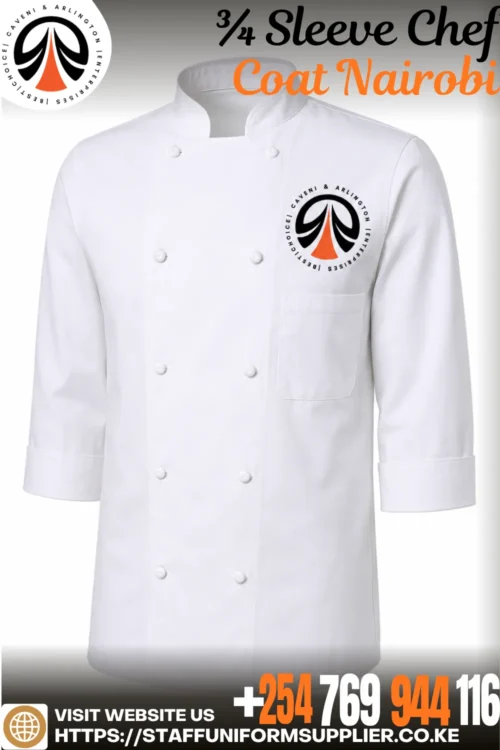
The 3/4 sleeve chef coat is a popular choice among…
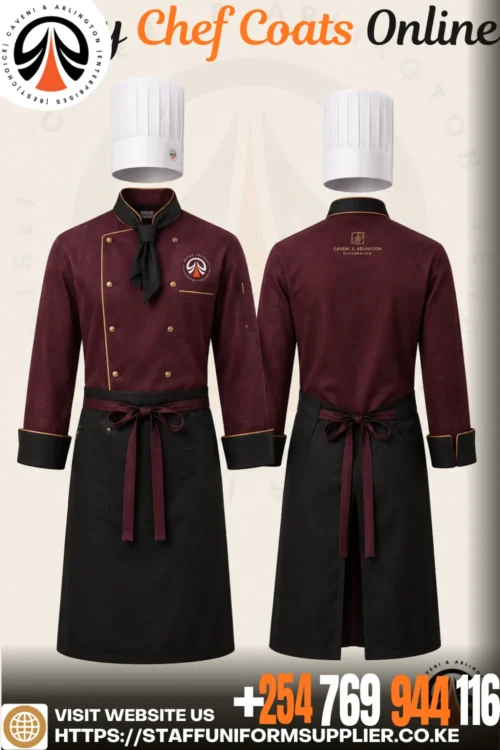
Buying chef coats online in Kenya has become a convenient…
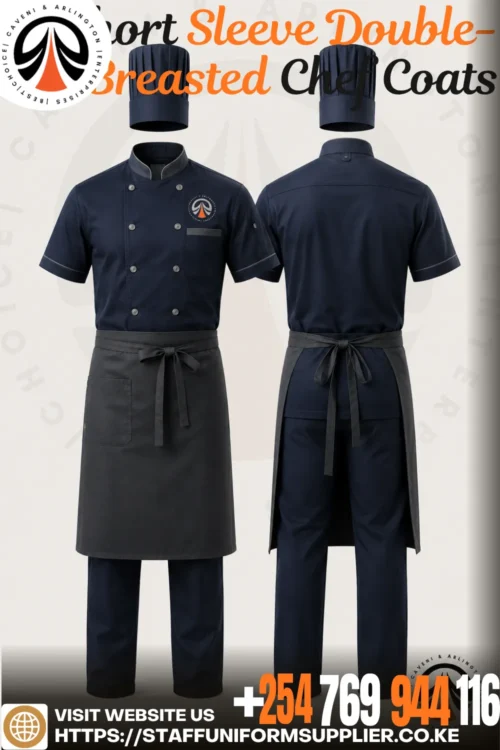
Short Sleeve Double-Breasted Chef Coats represent a modern evolution of…
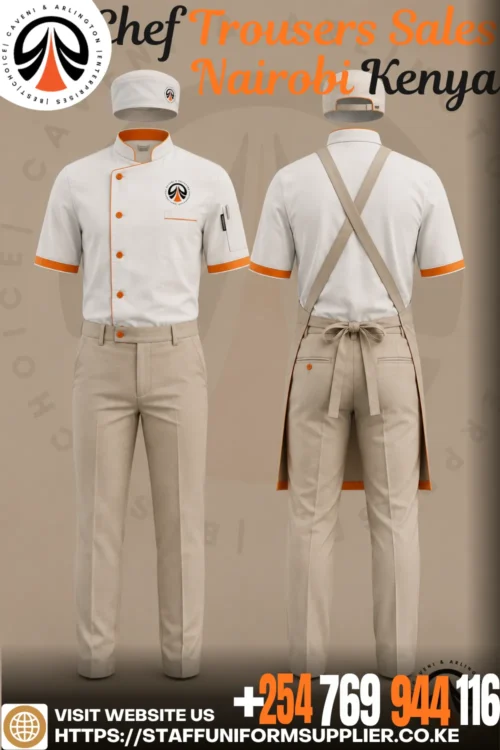
Looking for quality chef trousers for sale in Nairobi, Kenya?…