Makina Market -
Caveni.Arlington@gmail.com
+254 769 944116
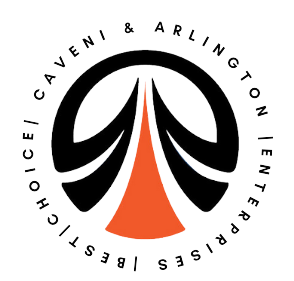
With dozens of dust coat suppliers in Kenya, quality dust coats Kenya varies enormously.
| Quality Benchmark | What to Look For | Why It Matters |
| Fabric GSM | 180–280 GSM depending on use | Durability and protection |
| Stitching | Double or triple stitched seams | Prevents tearing under strain |
| Colorfastness | Tested to ISO 105-C06 | Colors don’t bleed or fade quickly |
| Compliance | EN 340 / ISO 13688 / OSHA | Legal workplace safety requirement |
| Buttons & Closures | Reinforced buttonholes, strong closures | Coat stays functional after repeated use |
| Fit & Cut | Ergonomic, allows free movement | Worker comfort and productivity |
| Washability | 40–60°C machine washable, pre-shrunk | Maintains appearance through repeated washing |
| Fabric | Weight (GSM) | Benefits | Drawback |
| 100% Cotton | 180–220 GSM | Breathable, soft, natural | Shrinks, slower dry |
| Poly-Cotton (60/40) | 150–200 GSM | Wrinkle-resistant, durable | Less breathable |
| Poly-Cotton (40/60) | 160–190 GSM | Soft, easy care | Slightly less durable |
| Cotton Twill | 200–260 GSM | Tough, professional finish | Heavier |
| Drill Cotton | 240–280 GSM | Heavy-duty, industrial grade | Stiff initially |
| Standard | What It Covers | Applicability in Kenya |
| EN 340 | General requirements for protective clothing | Widely referenced by PPE suppliers |
| ISO 13688 | Performance requirements for PPE clothing | Used in institutional procurement |
| OSHA Kenya | Occupational Safety & Health Act compliance | Mandatory for industrial workwear |
| KEBS KS 1959 | Kenya Bureau of Standards workwear spec | Local quality benchmark |
| EN ISO 6330 | Domestic washing of test samples | Ensures repeated washability |
| Dust Coat Type | Fabric | Best For |
| Plain Cotton Dust Coat | 100% Cotton | Schools, Cleaners, Labs |
| Polyester/Cotton Blend | 40/60 Poly-Cotton | Workshops, Factories |
| Branded / Printed Dust Coat | Cotton/Twill | Corporate, Retail Staff |
| Heavy-Duty Industrial Coat | Thick Drill Cotton | Construction, Engineering |
| White Lab Coat (Medical) | Cotton / Poly-Cotton | Labs, Medical, Teaching |
| Custom Embroidered Dust Coat | Any Fabric | Branded Uniforms |
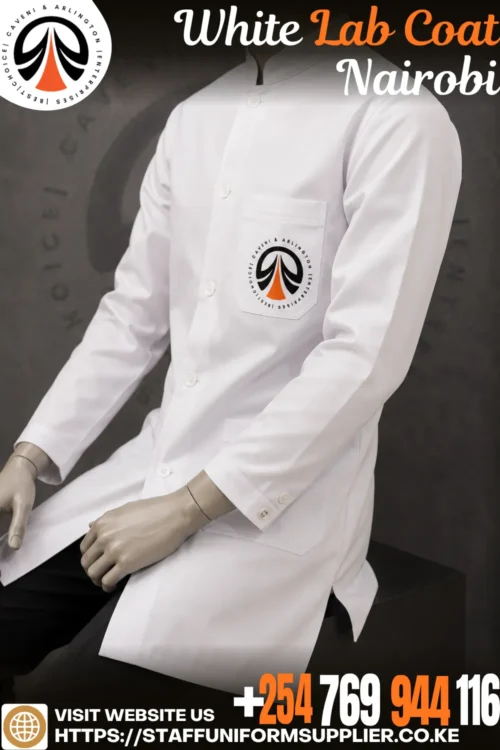
If you are searching for a white lab coat Nairobi,…
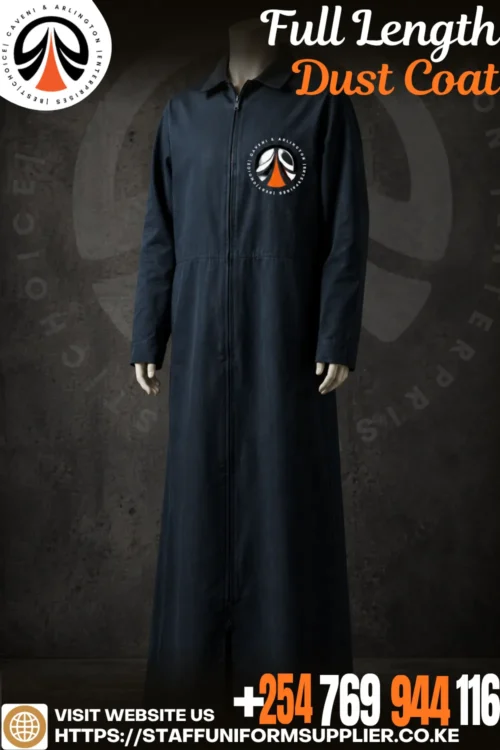
When the job demands complete protection from the neck to…
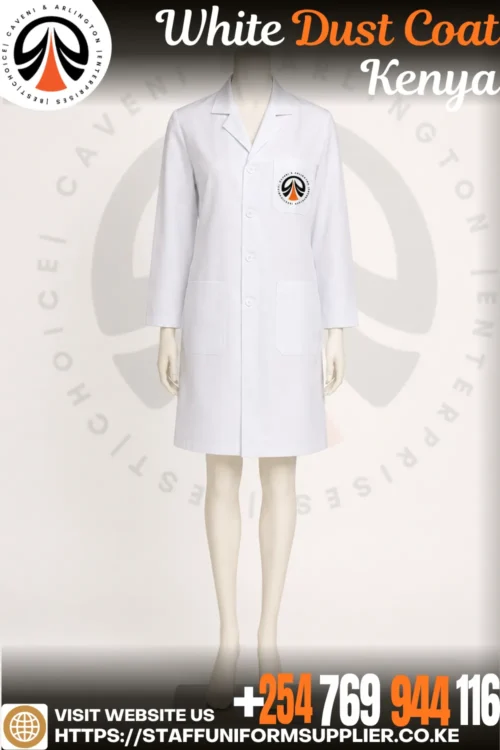
Whether you are a laboratory technician, food handler, teacher, pharmacist,…
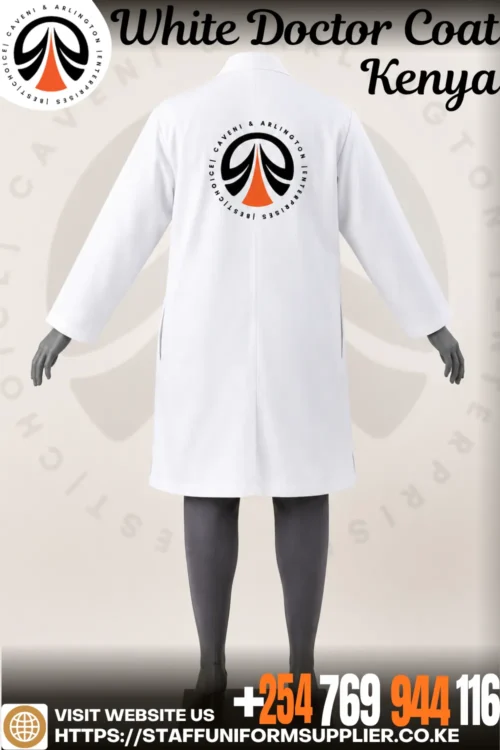
Whether you work in a hospital, a university laboratory, a…